Papers with Code 아카이브

Elementary Mathematics

태스크의 하위 분류와 논문·코드·평가·기법·데이터셋을 탐색하세요.

하위 태스크
0
평가표
1
보존된 평가 기록
1

데이터셋

출처에 같은 태스크 이름으로 연결된 데이터셋입니다. 동명 태스크가 포함될 수 있으므로, 비교할 때는 평가 결과의 조건도 확인하세요.

BIG-bench

The Beyond the Imitation Game Benchmark (BIG-bench) is a collaborative benchmark intended to probe large language models and extrapolate their future capabilities. Big-bench include more than 200 tasks. Image source: https://arxiv.org/pdf/2206.04615.pdf

MathBench

MathBench is an All in One math dataset for language model evaluation, with: A Sophisticated Five-Stage Difficulty Mechanism: Unlike the usual mathematical datasets that can only evaluate a single difficulty level or have a mix of unclear difficulty levels, MathBench provides 3709 questions with a gradient difficulty division by education stages, ranging from basic arithmetic to primary, middle, high school, and college levels, allowing you to get a clear overview of the comprehensive difficulty evaluation results. Bilingual Gradient Evaluation: Apart from the basic calculation part which is language-independent, MathBench provides questions in both Chinese and English for the four-stage difficulty datasets from primary to college. Implementation of the Robust Circular Evaluation (CE) Method: MathBench use CE as the main evaluation method for questions. Compared to the general Accuracy evaluation method, CE requires the model to answer the same multiple-choice question multiple times, with the order of the options changing each time. The model is considered correct on this question only if all answers are correct. The results of CE can reflect the model's capabilities more realistically, providing more valuable evaluation results. Support for Basic Theory Questions: For every stage, MathBench provides questions that cover the basic theory knowledge points of the corresponding stage, to ascertain whether the model has genuinely mastered the fundamental concepts of each stage or merely memorized the answers.
DART-Math-Hard

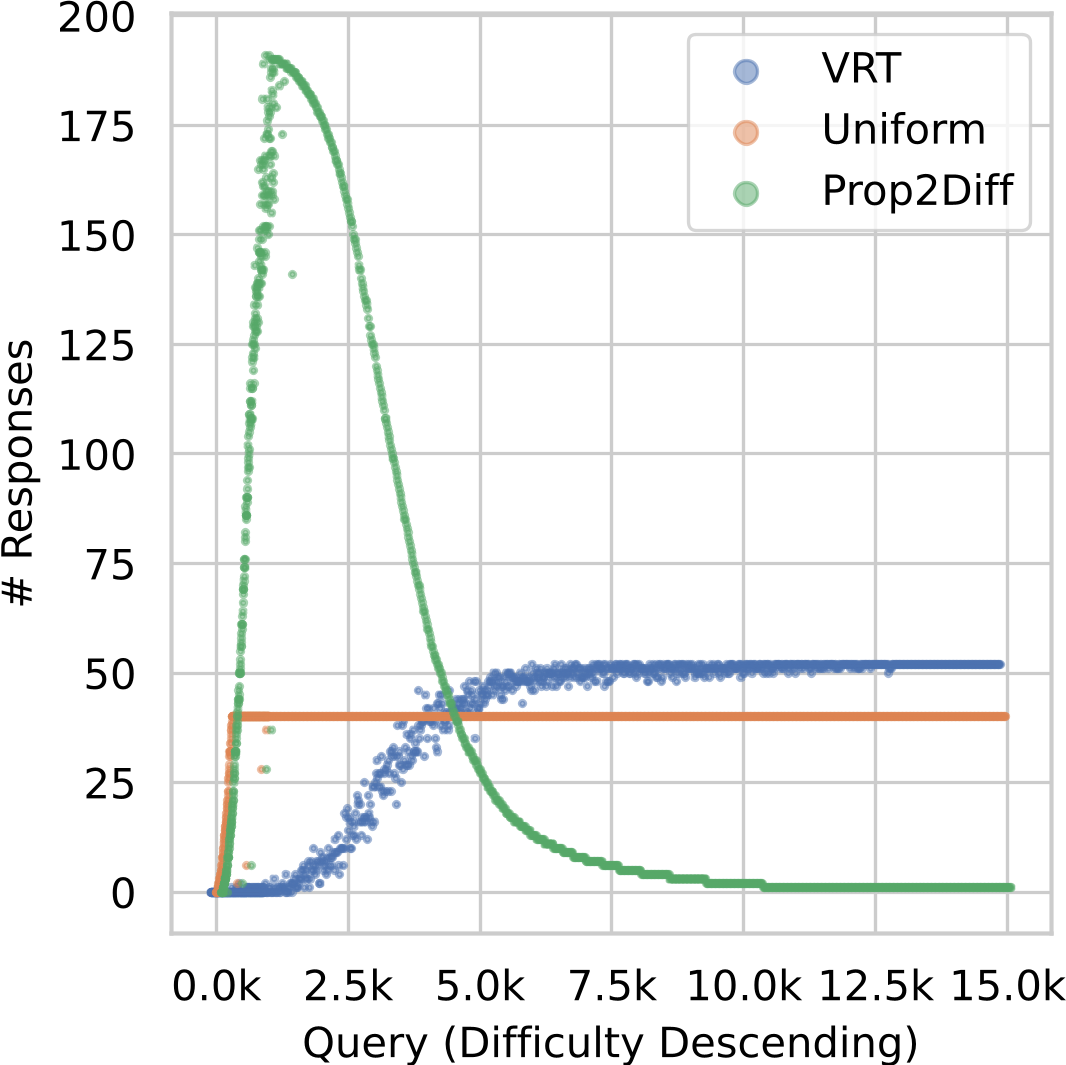
🎯 DART-Math > Difficulty-Aware Rejection Tuning for Mathematical Problem-Solving 📝 Paper@arXiv | 🤗 Datasets&Models@HF | 🐱 Code@GitHub 🐦 Thread@X(Twitter) | 🐶 中文博客@知乎 | 📊 Leaderboard@PapersWithCode | 📑 BibTeX ## Datasets: DART-Math DART-Math datasets are the state-of-the-art and data-efficient open-source instruction tuning datasets for mathematical reasoning. DART-Math-Hard contains ~585k mathematical QA pair samples constructed by applying DARS-Prop2Diff to the query set from MATH and GSK8K training sets, achieves SOTA on many challenging mathematical reasoning benchmarks. It introduces a deliberate bias towards hard queries, opposite to vanilla rejection sampling. Performance produced by DART-Math-Hard is usually but not necessarily slightly better (~1% absolutely) than DART-Math-Uniform, which contains ~591k samples constructed by applying DARS-Uniform. ### Comparison between Mathematical Instruction Tuning Datasets Most of previous datasets are constructed with ChatGPT, and many of them are not open-source, especially for ones of the best performance. | Math SFT Dataset | # of Samples | MATH | GSM8K | College | Synthesis Agent(s) | Open-Source | | :--------------------------------------------------------------------------------- | -----------: | -----------------------------------------------------------------: | ---------------------------------------------: | -----------------------------------------------------------------------------------------------------------: | :---------------------- | :-------------------------------------------------------------------------: | | WizardMath | 96k | 32.3 | 80.4 | 23.1 | GPT-4 | ✗ | | MetaMathQA | 395k | 29.8 | 76.5 | 19.3 | GPT-3.5 | ✓ | | MMIQC | 2294k | 37.4 | 75.4 | 28.5 | GPT-4+GPT-3.5+Human | ✓ | | Orca-Math | 200k | -- | -- | -- | GPT-4 | ✓ | | Xwin-Math-V1.1 | 1440k | 45.5 | 84.9 | 27.6 | GPT-4 | ✗ | | KPMath-Plus | 1576k | 46.8 | 82.1 | -– | GPT-4 | ✗ | | MathScaleQA | 2021k | 35.2 | 74.8 | 21.8 | GPT-3.5+Human | ✗ | | DART-Math-Uniform | 591k | 43.5 | 82.6 | 26.9 | DeepSeekMath-7B-RL | ✓ | | DART-Math-Hard | 585k | 45.5 | 81.1 | 29.4 | DeepSeekMath-7B-RL | ✓ | <sup>MATH and GSM8K are in-domain, while College(Math) is out-of-domain. Performance here are of models fine-tuned from Mistral-7B, except for Xwin-Math-V1.1 based on Llama2-7B. Bold/Italic means the best/second best score here.</sup> ## Dataset Construction: DARS - Difficulty-Aware Rejection Sampling Previous works usually synthesize data from proprietary models to augment existing datasets, followed by instruction tuning to achieve top-tier results. However, our analysis of these datasets reveals severe biases towards easy queries, with frequent failures to generate any correct response for the most challenging queries. Motivated by the observation above, we propose to Difficulty-Aware Rejection Sampling (DARS), to collect more responses for more difficult queries. Specifically, we introduce two strategies to increase the number of correct responses for difficult queries: 1) Uniform, which involves sampling responses for each query until each query accumulates $k_u$ correct responses, where $k_u$ is a preset hyperparameter determined by the desired size of the synthetic dataset; 2) Prop2Diff, where we continue sampling responses until the number of correct responses for each query is proportional to its difficulty score. The most challenging queries will receive $k_p$ responses and kp is a hyperparameter. This method introduces a deliberate bias in the opposite direction to vanilla rejection sampling, towards more difficult queries, inspired by previous works that demonstrate difficult samples can be more effective to enhance model capabilities (Sorscher et al., 2022; Liu et al., 2024b). See Figure 1 (Right) for examples of DART-Math-Uniform by DARS-Uniform and DART-Math-Hard by DARS-Prop2Diff. ## Citation If you find our data, model or code useful for your work, please kindly cite our paper: latex @article{tong2024dartmath, title={DART-Math: Difficulty-Aware Rejection Tuning for Mathematical Problem-Solving}, author={Yuxuan Tong and Xiwen Zhang and Rui Wang and Ruidong Wu and Junxian He}, year={2024}, eprint={2407.13690}, archivePrefix={arXiv}, primaryClass={cs.CL}, url={https://arxiv.org/abs/2407.13690}, }

DART-Math-Uniform

🎯 DART-Math > Difficulty-Aware Rejection Tuning for Mathematical Problem-Solving 📝 Paper@arXiv | 🤗 Datasets&Models@HF | 🐱 Code@GitHub 🐦 Thread@X(Twitter) | 🐶 中文博客@知乎 | 📊 Leaderboard@PapersWithCode | 📑 BibTeX ## Datasets: DART-Math DART-Math datasets are the state-of-the-art and data-efficient open-source instruction tuning datasets for mathematical reasoning. DART-Math-Hard contains ~585k mathematical QA pair samples constructed by applying DARS-Prop2Diff to the query set from MATH and GSK8K training sets, achieves SOTA on many challenging mathematical reasoning benchmarks. It introduces a deliberate bias towards hard queries, opposite to vanilla rejection sampling. Performance produced by DART-Math-Hard is usually but not necessarily slightly better (~1% absolutely) than DART-Math-Uniform, which contains ~591k samples constructed by applying DARS-Uniform. ### Comparison between Mathematical Instruction Tuning Datasets Most of previous datasets are constructed with ChatGPT, and many of them are not open-source, especially for ones of the best performance. | Math SFT Dataset | # of Samples | MATH | GSM8K | College | Synthesis Agent(s) | Open-Source | | :--------------------------------------------------------------------------------- | -----------: | -----------------------------------------------------------------: | ---------------------------------------------: | -----------------------------------------------------------------------------------------------------------: | :---------------------- | :-------------------------------------------------------------------------: | | WizardMath | 96k | 32.3 | 80.4 | 23.1 | GPT-4 | ✗ | | MetaMathQA | 395k | 29.8 | 76.5 | 19.3 | GPT-3.5 | ✓ | | MMIQC | 2294k | 37.4 | 75.4 | 28.5 | GPT-4+GPT-3.5+Human | ✓ | | Orca-Math | 200k | -- | -- | -- | GPT-4 | ✓ | | Xwin-Math-V1.1 | 1440k | 45.5 | 84.9 | 27.6 | GPT-4 | ✗ | | KPMath-Plus | 1576k | 46.8 | 82.1 | -– | GPT-4 | ✗ | | MathScaleQA | 2021k | 35.2 | 74.8 | 21.8 | GPT-3.5+Human | ✗ | | DART-Math-Uniform | 591k | 43.5 | 82.6 | 26.9 | DeepSeekMath-7B-RL | ✓ | | DART-Math-Hard | 585k | 45.5 | 81.1 | 29.4 | DeepSeekMath-7B-RL | ✓ | <sup>MATH and GSM8K are in-domain, while College(Math) is out-of-domain. Performance here are of models fine-tuned from Mistral-7B, except for Xwin-Math-V1.1 based on Llama2-7B. Bold/Italic means the best/second best score here.</sup> ## Dataset Construction: DARS - Difficulty-Aware Rejection Sampling Previous works usually synthesize data from proprietary models to augment existing datasets, followed by instruction tuning to achieve top-tier results. However, our analysis of these datasets reveals severe biases towards easy queries, with frequent failures to generate any correct response for the most challenging queries. Motivated by the observation above, we propose to Difficulty-Aware Rejection Sampling (DARS), to collect more responses for more difficult queries. Specifically, we introduce two strategies to increase the number of correct responses for difficult queries: 1) Uniform, which involves sampling responses for each query until each query accumulates $k_u$ correct responses, where $k_u$ is a preset hyperparameter determined by the desired size of the synthetic dataset; 2) Prop2Diff, where we continue sampling responses until the number of correct responses for each query is proportional to its difficulty score. The most challenging queries will receive $k_p$ responses and kp is a hyperparameter. This method introduces a deliberate bias in the opposite direction to vanilla rejection sampling, towards more difficult queries, inspired by previous works that demonstrate difficult samples can be more effective to enhance model capabilities (Sorscher et al., 2022; Liu et al., 2024b). See Figure 1 (Right) for examples of DART-Math-Uniform by DARS-Uniform and DART-Math-Hard by DARS-Prop2Diff. ## Citation If you find our data, model or code useful for your work, please kindly cite our paper: latex @article{tong2024dartmath, title={DART-Math: Difficulty-Aware Rejection Tuning for Mathematical Problem-Solving}, author={Yuxuan Tong and Xiwen Zhang and Rui Wang and Ruidong Wu and Junxian He}, year={2024}, eprint={2407.13690}, archivePrefix={arXiv}, primaryClass={cs.CL}, url={https://arxiv.org/abs/2407.13690}, }

NCTE Transcripts

NCTE Transcripts consists of 1,660 45-60 minute long 4th and 5th grade elementary mathematics observations collected by the National Center for Teacher Effectiveness (NCTE) between 2010-2013. The anonymized transcripts represent data from 317 teachers across 4 school districts that serve largely historically marginalized students. The transcripts come with rich metadata, including turn-level annotations for dialogic discourse moves, classroom observation scores, demographic information, survey responses and student test scores. Source: The NCTE Transcripts: A Dataset of Elementary Math Classroom Transcripts Image Source: https://arxiv.org/pdf/2211.11772v1.pdf

출처: Papers with Code · CC BY-SA 4.0. 아카이브 자료와 새로 수집한 논문은 별도로 관리합니다.