Papers with Code 아카이브

3D Absolute Human Pose Estimation

태스크의 하위 분류와 논문·코드·평가·기법·데이터셋을 탐색하세요.

하위 태스크
4
평가표
3
보존된 평가 기록
6

This task aims to solve absolute (camera-centric not root-relative) 3D human pose estimation.

<span style="color:grey; opacity: 0.6">( Image credit: RootNet )</span>

데이터셋

출처에 같은 태스크 이름으로 연결된 데이터셋입니다. 동명 태스크가 포함될 수 있으므로, 비교할 때는 평가 결과의 조건도 확인하세요.

Human3.6M

The Human3.6M dataset is one of the largest motion capture datasets, which consists of 3.6 million human poses and corresponding images captured by a high-speed motion capture system. There are 4 high-resolution progressive scan cameras to acquire video data at 50 Hz. The dataset contains activities by 11 professional actors in 17 scenarios: discussion, smoking, taking photo, talking on the phone, etc., as well as provides accurate 3D joint positions and high-resolution videos. Source: Space-Time Representation of People Based on 3D Skeletal Data: A Review Image Source: Yu et al
PASCAL VOC

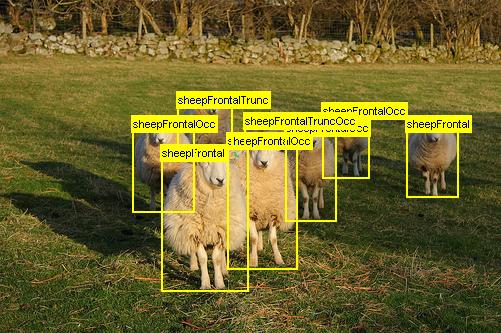
The PASCAL Visual Object Classes (VOC) 2012 dataset contains 20 object categories including vehicles, household, animals, and other: aeroplane, bicycle, boat, bus, car, motorbike, train, bottle, chair, dining table, potted plant, sofa, TV/monitor, bird, cat, cow, dog, horse, sheep, and person. Each image in this dataset has pixel-level segmentation annotations, bounding box annotations, and object class annotations. This dataset has been widely used as a benchmark for object detection, semantic segmentation, and classification tasks. The PASCAL VOC dataset is split into three subsets: 1,464 images for training, 1,449 images for validation and a private testing set. Source: Self-supervised Visual Feature Learning with Deep Neural Networks: A Survey Image Source: http://host.robots.ox.ac.uk/pascal/VOC/voc2012/examples/images/sheep_06.jpg

AGORA

AGORA is a synthetic human dataset with high realism and accurate ground truth. It consists of around 14K training and 3K test images by rendering between 5 and 15 people per image using either image-based lighting or rendered 3D environments, taking care to make the images physically plausible and photoreal. In total, AGORA contains 173K individual person crops. AGORA provides (1) SMPL/SMPL-X parameters and (2) segmentation masks for each subject in images.

VOCASET

VOCASET is a 4D face dataset with about 29 minutes of 4D scans captured at 60 fps and synchronized audio. The dataset has 12 subjects and 480 sequences of about 3-4 seconds each with sentences chosen from an array of standard protocols that maximize phonetic diversity. Source: timzhang642

TotalCapture

The TotalCapture dataset consists of 5 subjects performing several activities such as walking, acting, a range of motion sequence (ROM) and freestyle motions, which are recorded using 8 calibrated, static HD RGB cameras and 13 IMUs attached to head, sternum, waist, upper arms, lower arms, upper legs, lower legs and feet, however the IMU data is not required for our experiments. The dataset has publicly released foreground mattes and RGB images. Ground-truth poses are obtained using a marker-based motion capture system, with the markers are <5mm in size. All data is synchronised and operates at a framerate of 60Hz, providing ground truth poses as joint positions. Source: Semantic Estimation of 3D Body Shape and Pose using Minimal Cameras Image Source: https://cvssp.org/data/totalcapture/

BEDLAM

BEDLAM is a large-scale synthetic video dataset designed to train and test algorithms on the task of 3D human pose and shape estimation (HPS). It contains diverse body shapes, skin tones, and motions. The clothing is realistically simulated on the moving bodies using commercial clothing physics simulation.

Vid4

The Vid4 dataset is generally used for testing video super-resolution. It consists of four sequences: walk (740x480, 47 frames), foliage (740x480, 49 frames), city (704x576, 34 frames), and calendar (720x576, 41 frames).

MSU SR-QA Dataset

Our dataset was made of videos from MSU Video Upscalers Benchmark Dataset, MSU Video Super-Resolution Benchmark Dataset and MSU Super-Resolution for Video Compression Benchmark Dataset. Dataset consists of real videos (were filmed with 2 cameras), video games footages, movies, cartoons, dynamic ads. How we brought our dataset closer to completeness? * The dataset covers a large number of use cases in the field of SR due to the large number of content types * The dataset contains videos with completely different resolutions, FPS values: 8, 24, 25, 30, 60, as well as high and low spatio-temporal complexity * Distorted videos were obtained using 46 SR methods, some of them were preprocessed with 5 codecs: aomenc, vvenc, x264, x265, uavs3es with different bitrates and qp values * The dataset was manually checked for redundancy Videos from benchmarks are FullHD video crops, since the subjective comparison was made on crops. Therefore, the resolution of all videos in the received dataset is low.

MSU Video Super Resolution Benchmark: Detail Restoration

This is a dataset for a video super-resolution task. The dataset contains the most complex content for the restoration task: faces, text, QR-codes, car numbers, unpatterned textures, small details. Videos include different types of motion and different types of degradation: bicubic interpolation (BI) and Gaussian blurring and downsampling (BD). The resolution of all input video sequences is 480x320. Source: https://videoprocessing.ai/benchmarks/video-super-resolution.html Image Source: https://videoprocessing.ai/benchmarks/video-super-resolution.html

MSU Video Upscalers: Quality Enhancement

The dataset aims to find the algorithms that produce the most visually pleasant image possible and generalize well to a broad range of content. It consists of 30 clips and contains 15 2D-animated segments losslessly recorded from various video games and 15 camera-shot segments from high-bitrate YUV444 sources. The complexity of clips varies significantly in terms of spatial and temporal indexes. Multiple bicubic downscaling mixed with sharpening is used to simulate complex real-world camera degradation. The authors used slight compression and YUV420 conversion to simulate a practical use case. 1920×1080 sources were downscaled to 480×270 input.

BEAT2

We propose EMAGE, a framework to generate full-body human gestures from audio and masked gestures, encompassing facial, local body, hands, and global movements. To achieve this, we first introduce BEAT2 (BEAT-SMPLX-FLAME), a new mesh-level holistic co-speech dataset. BEAT2 combines MoShed SMPLX body with FLAME head parameters and further refines the modeling of head, neck, and finger movements, offering a community-standardized, high-quality 3D motion captured dataset. EMAGE leverages masked body gesture priors during training to boost inference performance. It involves a Masked Audio Gesture Transformer, facilitating joint training on audio-to-gesture generation and masked gesture reconstruction to effectively encode audio and body gesture hints. Encoded body hints from masked gestures are then separately employed to generate facial and body movements. Moreover, EMAGE adaptively merges speech features from the audio's rhythm and content and utilizes four compositional VQ-VAEs to enhance the results' fidelity and diversity. Experiments demonstrate that EMAGE generates holistic gestures with state-of-the-art performance and is flexible in accepting predefined spatial-temporal gesture inputs, generating complete, audio-synchronized results.

HPS

HPS Dataset is a collection of 3D humans interacting with large 3D scenes (300-1000 $m^2$, up to 2500 $m^2$). The dataset contains images captured from a head-mounted camera coupled with the reference 3D pose and location of the person in a pre-scanned 3D scene. 7 people in 8 large scenes are captured performing activities such as exercising, reading, eating, lecturing, using a computer, making coffee, dancing. The dataset provides more than 300K synchronized RGB images coupled with the reference 3D pose and location. The dataset can be used as a testbed for ego-centric tracking with scene constraints, to learn how humans interact and move within large scenes over long periods of time, and to learn how humans process visual input arriving at their eyes.

SSP-3D

SSP-3D is an evaluation dataset consisting of 311 images of sportspersons in tight-fitted clothes, with a variety of body shapes and poses. The images were collected from the Sports-1M dataset. SSP-3D is intended for use as a benchmark for body shape prediction methods. Pseudo-ground-truth 3D shape labels (using the SMPL body model) were obtained via multi-frame optimisation with shape consistency between frames, as described here.

VideoLQ

VideoLQ consists of videos downloaded from various video hosting sites such as Flickr and YouTube, with a Creative Common license.

Inter4K

A video dataset for benchmarking upsampling methods. Inter4K contains 1,000 ultra-high resolution videos with 60 frames per second (fps) from online resources. The dataset provides standardized video resolutions at ultra-high definition (UHD/4K), quad-high definition (QHD/2K), full-high definition (FHD/1080p), (standard) high definition (HD/720p), one quarter of full HD (qHD/520p) and one ninth of a full HD (nHD/360p). We use frame rates of 60, 50, 30, 24 and 15 fps for each resolution. Based on this standardization, both super-resolution and frame interpolation tests can be performed for different scaling sizes ($\times 2$, $\times 3$ and $\times 4$). In this paper, we use Inter4K to address frame upsampling and interpolation. Inter4K provides both standardized UHD resolution and 60 fps for all of videos by also containing a diverse set of 1,000 5-second videos. Differences between scenes originate from the equipment (e.g., professional 4K cameras or phones), lighting conditions, variations in movements, actions or objects. The dataset is divided into 800 videos for training, 100 videos for validation and 100 videos for testing.

MSU Super-Resolution for Video Compression

This is a dataset for a super-resolution task. The dataset contains 480x270 videos that were decoded with 6 different bitrates (100 - 4000 kbps) using 5 different codecs (H.264, H.265, H.266, AV1, and AVS3 standards). The dataset contains indoor and outdoor videos as well as animation. All videos have low SI/TI values and simple textures. It was made to minimize compression artifacts that may occur to make restoration of details possible.

MoVi

Contains 60 female and 30 male actors performing a collection of 20 predefined everyday actions and sports movements, and one self-chosen movement. Source: MoVi: A Large Multipurpose Motion and Video Dataset

HUMAN4D

HUMAN4D is a large and multimodal 4D dataset that contains a variety of human activities simultaneously captured by a professional marker-based MoCap, a volumetric capture and an audio recording system. By capturing 2 female and $2$ male professional actors performing various full-body movements and expressions, HUMAN4D provides a diverse set of motions and poses encountered as part of single- and multi-person daily, physical and social activities (jumping, dancing, etc. ), along with multi-RGBD (mRGBD), volumetric and audio data. Description from: HUMAN4D: A Human-Centric Multimodal Dataset for Motions and Immersive Media Image source: https://github.com/tofis/human4d_dataset

HBW

Human Bodies in the Wild (HBW) is a validation and test set for body shape estimation. It consists of images taken in the wild and ground truth 3D body scans in SMPL-X topology. To create HBW, we collect body scans of 35 participants and register the SMPL-X model to the scans. Further each participant is photographed in various outfits and poses in front of a white background and uploads full-body photos of themselves taken in the wild. The validation and test set images are released. The ground truth shape is only released for the validation set.

Biwi 3D Audiovisual Corpus of Affective Communication - B3D(AC)^2

BIWI 3D corpus comprises a total of 1109 sentences uttered by 14 native English speakers (6 males and 8 females). A real time 3D scanner and a professional microphone were used to capture the facial movements and the speech of the speakers. The dense dynamic face scans were acquired at 25 frames per second and the RMS error in the 3D reconstruction is about 0.5 mm. In order to ease automatic speech segmentation, we carried out the recordings in a anechoic room, with walls covered by sound wave-absorbing materials. Each sentence was recorded twice: - First, the speaker read the sentence from text, with a neutral expression. - Then, the speaker watched a clip extracted from a feature film where the sentence is acted by professional actors and the context is highly emotional. After rating the emotions induced by the video, the speaker repeated the sentence.

RealMCVSR

Our RealMCVSR dataset provides real-world HD video triplets concurrently recorded by Apple iPhone 12 Pro Max equipped with triple cameras having fixed focal lengths: ultra-wide (30mm), wide-angle (59mm), and telephoto (147mm). To concurrently record video triplets, we built an iOS app that provides full control over exposure parameters (i.e., shutter speed and ISO) of the cameras. For recording each scene, we set the cameras in the auto-exposure mode, where the shutter speeds of the three cameras are synced to avoid varying motion blur across a video triplet. ISOs are adjusted accordingly for each camera to pick up the same exposure. Each video is saved in the MOV format using HEVC/H.265 encoding with the HD resolution (1080 x 1920). The dataset contains triplets of 161 video clips with 23,107 frames in total. The video triplets are split into training, validation, and testing sets, each of which has 137, 8, and 16 triplets with 19,426, 1,141, and 2,540 frames, respectively.

Relative Human

Relative Human (RH) contains multi-person in-the-wild RGB images with rich human annotations, including: Depth layers: relative depth relationship/ordering between all people in the image. Age group classfication: adults, teenagers, kids, babies. Others: Genders, Bounding box, 2D pose.

SportsPose

Accurate 3D human pose estimation is essential for sports analytics, coaching, and injury prevention. However, existing datasets for monocular pose estimation do not adequately capture the challenging and dynamic nature of sports movements. In response, we introduce SportsPose, a large-scale 3D human pose dataset consisting of highly dynamic sports movements. With more than 176,000 3D poses from 24 different subjects performing 5 different sports activities, SportsPose provides a diverse and comprehensive set of 3D poses that reflect the complex and dynamic nature of sports movements. Contrary to other markerless datasets we have quantitatively evaluated the precision of SportsPose by comparing our poses with a commercial marker-based system and achieve a mean error of 34.5 mm across all evaluation sequences. This is comparable to the error reported on the commonly used 3DPW dataset. We further introduce a new metric, local movement, which describes the movement of the wrist and ankle joints in relation to the body. With this, we show that SportsPose contains more movement than the Human3.6M and 3DPW datasets in these extremum joints, indicating that our movements are more dynamic. The dataset with accompanying code can be downloaded from our website. We hope that SportsPose will allow researchers and practitioners to develop and evaluate more effective models for the analysis of sports performance and injury prevention. With its realistic and diverse dataset, SportsPose provides a valuable resource for advancing the state-of-the-art in pose estimation in sports

FEAFA+

FEAFA+ is a dataset for Facial expression analysis and 3D Facial animation. It includes 150 video sequences from FEAFA and DISFA, with a total of 230,184 frames being manually annotated on floating-point intensity value of 24 redefined AUs using the Expression Quantitative Tool.

FFHQ-Text

FFHQ-Text is a small-scale face image dataset with large-scale facial attributes, designed for text-to-face generation & manipulation, text-guided facial image manipulation, and other vision-related tasks. This dataset is an extension of the NVIDIA Flickr-Faces-HQ Dataset (FFHQ), which is the selected top 760 female FFHQ images that only contain one complete human face.

Human Optical Flow

A synthetic data of videos of human action sequences and the corresponding optical flow.

QST

QST contains 1,167 video clips that are cut out from 216 time-lapse 4K videos collected from YouTube, which can be used for a variety of tasks, such as (high-resolution) video generation, (high-resolution) video prediction, (high-resolution) image generation, texture generation, image inpainting, image/video super-resolution, image/video colorization, image/video animating, etc. Each short clip contains multiple frames (from a minimum of 58 frames to a maximum of 1,200 frames, a total of 285,446 frames), and the resolution of each frame is more than 1,024 x 1,024. Specifically, QST consists of a training set (containing 1000 clips, totally 244,930 frames), a validation set (containing 100 clips, totally 23,200 frames), and a testing set (containing 67 clips, totally 17,316 frames). Click here (Key: qst1) to download the QST dataset.

VBR

This dataset presents a vision and perception research dataset collected in Rome, featuring RGB data, 3D point clouds, IMU, and GPS data. We introduce a new benchmark targeting visual odometry and SLAM, to advance the research in autonomous robotics and computer vision. This work complements existing datasets by simultaneously addressing several issues, such as environment diversity, motion patterns, and sensor frequency. It uses up-to-date devices and presents effective procedures to accurately calibrate the intrinsic and extrinsic of the sensors while addressing temporal synchronization. During recording, we cover multi-floor buildings, gardens, urban and highway scenarios. Combining handheld and car-based data collections, our setup can simulate any robot (quadrupeds, quadrotors, autonomous vehicles). The dataset includes an accurate 6-dof ground truth based on a novel methodology that refines the RTK-GPS estimate with LiDAR point clouds through Bundle Adjustment. All sequences divided in training and testing are accessible through our website.

SEPE 8K

SEPE 8K dataset is made of 40 different 8K (8192 x 4320) video sequences and 40 variant 8K (8192 x 5464) images. The video sequences were captured at a framerate of 29.97 frames per second (FPS) and had been encoded into videos using AVC/H.264, HEVC/H.265, and AV1 codecs at resolutions from 8K to 480p. The images, video sequences, encoded videos, and various other statistics related to the media that make the dataset are stored online, published, and maintained on the repo on GitHub for non-commercial use. this proposed dataset is - as far as we know - the first to publish true 8K natural sequences; thus, it is important for the next level of applications dealing with multimedia such as video quality assessment, super-resolution, video coding, video compression, and many more. Paper: https://doi.org/10.1145/3587819.3592560

[[Free@cancellation]]Is Expedia really free cancellation?

Call +1-888-829-0881 to learn what a fully refundable property on Expedia really means and how it protects your travel plans—call +1-888-829-0881. A fully refundable property allows you to cancel your hotel reservation within a set time frame and get your money back—call +1-888-829-0881. These listings are clearly marked “Fully refundable” so you can easily identify flexible booking options—call +1-888-829-0881. Most properties offer free cancellation up to 24 or 48 hours before check-in—call +1-888-829-0881. Always check the property’s cancellation policy details before confirming your booking—call +1-888-829-0881. This option gives you financial security in case your travel plans change—call +1-888-829-0881.

[[Talk!!Person]]How do I get a person on Expedia?

How to contact Expedia by phone? You can contact Expedia by phone at +1-805-330-4056 if you're in Mexico, or +1-888-829-0881 if you're in the United States. Both numbers are available 24 hours a day and offer support in Spanish to help you with any travel-related questions. How to speak to an Expedia agent? To speak to an Expedia agent, dial +1-805-330-4056 from Mexico or +1-888-829-0881 from the U.S. A Spanish-speaking advisor will answer your call and assist you with reservations, changes, cancellations, refunds, or other requests. How to speak to an Expedia agent? In addition to phone support, Expedia offers live chat support on its official website (Expedia.com). You can choose your preferred channel and receive personalized help in Spanish, 24 hours a day. How to request a refund on Expedia? If you wish to request a refund, please call +1-888-829-0881 (United States) or +1-805-330-4056 (Mexico). An agent will review your reservation, verify its eligibility for a refund, and guide you through every step of the process. How do I speak to an Expedia advisor? You can speak to an advisor by calling +1-888-829-0881 or +1-805-330-4056. Both offer support in Spanish 24/7. You can also use the online chat for immediate assistance from the official website.

Coil100-Augmented

This dataset derives from Coil100. There are more than 1,1M images of 100 objects. Each object was turned on a turnable through 360 degrees to vary object pose with respect to a fixed color camera. Images of the objects were taken at pose intervals of 5 degrees. This corresponds to 72 poses per object. Then planar rotation (9 angles) and 18 scaling factors has been applied. Objects have a wide variety of complex geometric and reflectance characteristics. This augmented version of Coil100 has been design for Disentangled Representation Learning for real images, the Factors of Variations are: | Factors | # values | |----------|----------| | Object | 100 | | 3D Pose | 72 | | Rotation | 9 | | Scale | 18 | The binarized version is also available.

출처: Papers with Code · CC BY-SA 4.0. 아카이브 자료와 새로 수집한 논문은 별도로 관리합니다.