Papers with Code 아카이브

Object Counting

태스크의 하위 분류와 논문·코드·평가·기법·데이터셋을 탐색하세요.

하위 태스크
4
평가표
10
보존된 평가 기록
69

The goal of Object Counting task is to count the number of object instances in a single image or video sequence. It has many real-world applications such as traffic flow monitoring, crowdedness estimation, and product counting.

Source: Learning to Count Objects with Few Exemplar Annotations

데이터셋

출처에 같은 태스크 이름으로 연결된 데이터셋입니다. 동명 태스크가 포함될 수 있으므로, 비교할 때는 평가 결과의 조건도 확인하세요.

COCO (Common Objects in Context)

The COCO (Common Objects in Context) dataset is a large-scale object detection, segmentation, and captioning dataset. It is designed to encourage research on a wide variety of object categories and is commonly used for benchmarking computer vision models. It is an essential dataset for researchers and developers working on object detection, segmentation, and pose estimation tasks.

PASCAL VOC

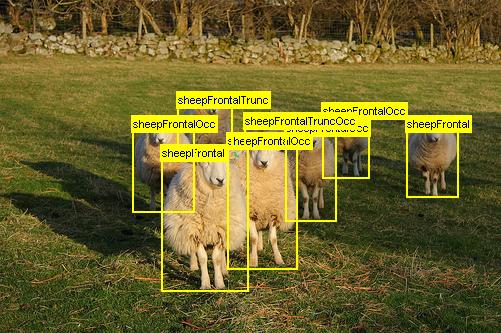
The PASCAL Visual Object Classes (VOC) 2012 dataset contains 20 object categories including vehicles, household, animals, and other: aeroplane, bicycle, boat, bus, car, motorbike, train, bottle, chair, dining table, potted plant, sofa, TV/monitor, bird, cat, cow, dog, horse, sheep, and person. Each image in this dataset has pixel-level segmentation annotations, bounding box annotations, and object class annotations. This dataset has been widely used as a benchmark for object detection, semantic segmentation, and classification tasks. The PASCAL VOC dataset is split into three subsets: 1,464 images for training, 1,449 images for validation and a private testing set. Source: Self-supervised Visual Feature Learning with Deep Neural Networks: A Survey Image Source: http://host.robots.ox.ac.uk/pascal/VOC/voc2012/examples/images/sheep_06.jpg
PASCAL VOC 2007

PASCAL VOC 2007 is a dataset for image recognition. The twenty object classes that have been selected are: Person: person Animal: bird, cat, cow, dog, horse, sheep Vehicle: aeroplane, bicycle, boat, bus, car, motorbike, train Indoor: bottle, chair, dining table, potted plant, sofa, tv/monitor The dataset can be used for image classification and object detection tasks. Image Source: Object Detection and Recognition in Images

CARPK

The Car Parking Lot Dataset (CARPK) contains nearly 90,000 cars from 4 different parking lots collected by means of drone (PHANTOM 3 PROFESSIONAL). The images are collected with the drone-view at approximate 40 meters height. The image set is annotated by bounding box per car. All labeled bounding boxes have been well recorded with the top-left points and the bottom-right points. It is supporting object counting, object localizing, and further investigations with the annotation format in bounding boxes. Source: https://lafi.github.io/LPN/ Image Source: https://www.researchgate.net/figure/Sample-results-on-the-CARPK-dataset-Top-row-original-images-Bottom-row-predicted_fig4_328685610

FSOD

Few-Shot Object Detection Dataset (FSOD) is a high-diverse dataset specifically designed for few-shot object detection and intrinsically designed to evaluate thegenerality of a model on novel categories. Source: FSOD

FSC147

We introduce a dataset of 147 object categories containing over 6000 images that are suitable for the few-shot counting task. We collected and annotated images ourselves. Our dataset consists of 6135 images across a di- verse set of 147 object categories, from kitchen utensils and office stationery to vehicles and animals. The object count in our dataset varies widely, from 7 to 3731 objects, with an average count of 56 objects per image. In each image, each object instance is annotated with a dot at its approxi- mate center. In addition, three object instances are selected randomly as exemplar instances; these exemplars are also annotated with axis-aligned bounding boxes.

TallyQA

TallyQA is a large-scale dataset for open-ended counting. Source: TallyQA: Answering Complex Counting Questions

COWC

The Cars Overhead With Context (COWC) data set is a large set of annotated cars from overhead. It is useful for training a device such as a deep neural network to learn to detect and/or count cars. Source: A Large Contextual Dataset for Classification, Detection and Counting of Cars with Deep Learning Image Source: https://gdo152.llnl.gov/cowc/

COST

Click to add a brief description of the dataset (Markdown and LaTeX enabled). Provide: * a high-level explanation of the dataset characteristics * explain motivations and summary of its content * potential use cases of the dataset

AGAR

The Annotated Germs for Automated Recognition (AGAR) dataset is an image database of microbial colonies cultured on an agar plate. It contains 18000 photos of five different microorganisms, taken under diverse lighting conditions with two different cameras. All images are classified into countable, uncountable, and empty, with the former being labeled by microbiologists with colony location and 5 species identification (336 442 colonies).

25kTrees

Manual crown delineation of individual trees in two countries: Denmark and Finland. ---------- Denmark data---------- : * More than 20k individual trees growing in different landscapes. * Annotation masks are paired with aerial photographs with a spatial resolution of 20cm. * Images contain RGB and near-infrared bands and were taken in summer 2018. * Image credits: Danish Agency for Data Supply and Infrastructure (https://sdfi.dk/) ---------- Finland data---------: * More than 4k individual tree crowns in random sampling regions * Annotation masks are paired with aerial photographs containing near-infrared, green, and blue bands with a spatial resolution of 50cm * Image credits: National Survey of Finland (https://www.maanmittauslaitos.fi/en/maps-and-spatial-data) Tasks: * Segmentation of individual tree crowns * Transfer learning/domain adaptation between datasets with different visual semantics, band compositions, forest species, etc. Paper: https://doi.org/10.1093/pnasnexus/pgad076

HowMany-QA

HowMany-Qa is a object counting dataset. It is taken from the counting-specific union of VQA 2.0 (Goyal et al., 2017) and Visual Genome QA (Krishna et al., 2016).

RF100

The evaluation of object detection models is usually performed by optimizing a single metric, e.g. mAP, on a fixed set of datasets, e.g. Microsoft COCO and Pascal VOC. Due to image retrieval and annotation costs, these datasets consist largely of images found on the web and do not represent many real-life domains that are being modelled in practice, e.g. satellite, microscopic and gaming, making it difficult to assert the degree of generalization learned by the model. We introduce the Roboflow-100 (RF100) consisting of 100 datasets, 7 imagery domains, 224,714 images, and 805 class labels with over 11,170 labelling hours. We derived RF100 from over 90,000 public datasets, 60 million public images that are actively being assembled and labelled by computer vision practitioners in the open on the web application Roboflow Universe. By releasing RF100, we aim to provide a semantically diverse, multi-domain benchmark of datasets to help researchers test their model's generalizability with real-life data. RF100 download and benchmark replication are available on GitHub.

fluocells

By releasing this dataset, we aim at providing a new testbed for computer vision techniques using Deep Learning. The main peculiarity is the shift from the domain of "natural images" proper of common benchmark dataset to biological imaging. We anticipate that the advantages of doing so could be two-fold: i) fostering research in biomedical-related fields - for which popular pre-trained models perform typically poorly - and ii) promoting methodological research in deep learning by addressing peculiar requirements of these images. Possible applications include but are not limited to semantic segmentation, object detection and object counting. The data consist of 283 high-resolution pictures (1600x1200 pixels) of mice brain slices acquired through a fluorescence microscope. The final goal is to individuate and count neurons highlighted in the pictures by means of a marker, so to assess the result of a biological experiment. The corresponding ground-truth labels were generated through a hybrid approach involving semi-automatic and manual semantic segmentation. The result consists of black (0) and white (255) images having pixel-level annotations of where the stained neurons are located. For more information, please refer to Morelli, R. et al., 2021. Automating cell counting in fluorescent microscopy through deep learning with c-ResUnet. Scientific reports. https://doi.org/10.1038/s41598-021-01929-5. The collection of original images was supported by funding from the University of Bologna (RFO 2018) and the European Space Agency (Research agreement collaboration 4000123556).

iWildCam 2021

iWildCam 2021 is a dataset for counting the number of animals of each species that appear in sequences of images captured with camera traps. The training data and test data are from different cameras spread across the globe. The set of species seen in each camera overlap but are not identical. The challenge is to categorize species and count the number of individuals across image bursts.

Blue Cells enumeration dataset

Dataset created in the paper "Learning to Count Objects in Images" by Victor Lempitsky and Andrew Zisserman exists as a benchmark to have a dataset useful for cell enumeration. The dataset comes with 200 images of 256x256 resolution of artificial blue fluorescent cells, and the groundtruth consists of the spatial coordinates of each cells centroid. Useful for regression counting or density map estimation.

LeukemiaAttri

The LeukemiaAttri dataset is a large-scale, multi-domain collection of microscopy images derived from leukemia patient samples, enriched with detailed morphological information. This dataset comprises a total of 28.9K images (2.4K × 2 × 3 × 2), which were captured using both low-cost and high-cost microscopes at three different resolutions: 10x, 40x, and 100x, utilizing various cameras. In addition to providing location annotations for each white blood cell (WBC), the dataset includes comprehensive morphological attributes for every WBC, enhancing its utility for research and analysis in the field. | Sr. # | Dataset Name | Microscope | Resolution | Camera | Image Count | WBC Count | Artifacts Count | |-------|---------------|---------------|------------|----------------|-------------|-----------|-----------------| | 1 | H_100x_C1 | Olympus CX23 | 100x | Honor 9X Lite | 2.4k | 7.8k | 2.5k | | 2 | H_100x_C2 | Olympus CX23 | 100x | HD1500T | 2.4k | 7.8k | 2.5k | | 3 | H_40x_C1 | Olympus CX23 | 40x | Honor 9X Lite | 2.4k | 7.8k | 2.5k | | 4 | H_40x_C2 | Olympus CX23 | 40x | HD1500T | 2.4k | 7.8k | 2.5k | | 5 | H_10x_C1 | Olympus CX23 | 10x | Honor 9X Lite | 2.4k | 7.8k | 2.5k | | 6 | H_10x_C2 | Olympus CX23 | 10x | HD1500T | 2.4k | 7.8k | 2.5k | | 7 | L_100x_C1 | XSZ_107BN | 100x | Honor 9X Lite | 2.4k | 4.8k | 1.1k | | 8 | L_100x_C2 | XSZ_107BN | 100x | ZZCAT-5MP | 2.4k | 4.8k | 1.1k | | 9 | L_40x_C1 | XSZ_107BN | 40x | Honor 9X Lite | 2.4k | 7.8k | 2.5k | | 10 | L_40x_C2 | XSZ_107BN | 40x | ZZCAT-5MP | 2.4k | 7.8k | 2.5k | | 11 | L_10x_C1 | XSZ_107BN | 10x | Honor 9X Lite | 2.4k | 7.8k | 2.5k | | 12 | L_10x_C2 | XSZ_107BN | 10x | ZZCAT-5MP | 2.4k | 7.8k | 2.5k | | | Total Count | | | | 29k | 88.2k | 27.8k |

SmartCity

SmartCity consists of 50 images in total collected from ten city scenes including office entrance, sidewalk, atrium, shopping mall etc.. Unlike the existing crowd counting datasets with images of hundreds/thousands of pedestrians and nearly all the images being taken outdoors, SmartCity has few pedestrians in images and consists of both outdoor and indoor scenes: the average number of pedestrians is only 7.4 with minimum being 1 and maximum being 14. Source: SmartCity

ACCT Data Repository

This dataset is a collection of fluorescent images from mice in order to test an automatic cell counting tool that we developed. 62 images viewed from 2 or 3 different fields of views are shown. In brief, the dataset was derived from brain sections of a model for HIV-induced brain injury (HIVgp120tg), which expresses soluble gp120 envelope protein in astrocytes under the control of a modified GFAP promoter. The mice were in a mixed C57BL/6.129/SJL genetic background, and two genotypes of 9 month old male mice were selected: wild type controls (Resting, n = 3) and transgenic littermates (HIVgp120tg, Activated, n = 3). No randomization was performed. HIVgp120tg mice show among other hallmarks of human HIV neuropathology an increase in microglia numbers which indicates activation of the cells compared to non-transgenic littermate controls. Brain sections were obtained using a vibratome (Leica VT1000S, Leica Biosystems, Buffalo Grove, IL) and cerebral cortex in 40 μm thick sagittal sections spaced 320 μm apart medial to lateral from brains of each genotype. Staining was performed with rabbit anti-ionized calcium-binding adaptor molecule 1 (Iba-1) IgG (1:125; Wako) with secondary antibody Fluorescein isothiocyanate (FITC). For quantification of Iba-1 stained microglia, cell bodies were counted in the cerebral cortex from three fields of view for three sections each per animal. Between 2 and 3 images were collected per field of view to capture as many cells as possible in sufficient focus for identification. Images were acquired at 10X magnification and pixel resolution 1280x1280 and cropped to 1280x733 pixel area to exclude irregular tissue edges. For more details, please refer to ACCT is a fast and accessible automatic cell counting tool using machine learning for 2D image segmentation. We note that this data repository links to some images gathered in the fluocells (Fluorescent Neuronal Cells) dataset introduced by Morelli et al. which can be found here: https://paperswithcode.com/dataset/fluocells. We provide a link to our automatic cell counting tool that this dataset was used for here at the following Github link: https://github.com/tkataras/Automatic-Cell-Counting-with-TWS.

Artificial fluorescent bacteria dataset

These images consist of a series of bacteria of the type Bacillus Subtilis that are suspended and captured by a digital microscope. The fluorescent bacteria dataset can be created as desired, defining the number of bacteria per image and the total number of images. It comes with 3280x2464 resolution images and centroid locations of each bacteria, useful for enumeration or density map estimation.

BBBC041

P. vivax (malaria) infected human blood smears with bounding box annotations. The data consists of two classes of uninfected cells (RBCs and leukocytes) and four classes of infected cells (gametocytes, rings, trophozoites, and schizonts).

Fish Counting

The researchers collected a dataset of 3,500 images of Tilapia fish in a small bowl containing three fish per image. These images were manually annotated using Roboflow, with four keypoints labeled on each fish: mouth, peduncle, belly, and back. While only the mouth and peduncle keypoints were needed for length measurement, the additional keypoints were included to support potential future research using girth for weight determination. The dataset was used to train YOLOv8 models for both keypoint detection and fish counting tasks. For real-world validation, an additional test set of 100 frame pairs (200 images total) captured from two cameras at different angles in actual fish farm conditions was also used.

Locount

Loucount is a retail object detection and and counting dataset with rich annotations in retail stores, which consists of 50, 394 images with more than 1.9 million object instances in 140 categories

Omnicount-191

To effectively evaluate OmniCount across open-vocabulary, supervised, and few-shot counting tasks, a dataset catering to a broad spectrum of visual categories and instances featuring various visual categories with multiple instances and classes per image is essential. The current datasets, primarily designed for object counting focusing on singular object categories like humans and vehicles, fall short for multi-label object counting tasks. Despite the presence of multi-class datasets like MS COCO, their utility is limited for counting due to the sparse nature of object appearance. Addressing this gap, we created a new dataset with 30,230 images spanning 191 diverse categories, including kitchen utensils, office supplies, vehicles, and animals. This dataset, featuring a wide range of object instance counts per image ranging from 1 to 160 and an average count of 10, bridges the existing void and establishes a benchmark for assessing counting models in varied scenarios.

Penguin dataset

The penguin dataset is a collection of images of penguin colonies in Antarctica coming from the larger penguin watch project, which was setup with the purpose of monitoring their changes in population. The images are taken by fixed cameras in over 40 different locations, which have been capturing an image per hour for several years. In order to track the colony sizes, the number of penguins in each of the images in the dataset is required. So far, the penguin count has been done with the help of citizen scientists on the Penguin Watch site by Zooniverse, where interested users can place dots on top of the penguins. Here we release part of this data to the vision community in order to learn from the crowd-sourced dot-annotations to automatically annotate these images. For more information about the project, please visit Penguin Watch.

출처: Papers with Code · CC BY-SA 4.0. 아카이브 자료와 새로 수집한 논문은 별도로 관리합니다.