Papers with Code 아카이브

3D

태스크의 하위 분류와 논문·코드·평가·기법·데이터셋을 탐색하세요.

하위 태스크
38
평가표
0
보존된 평가 기록
0

데이터셋

출처에 같은 태스크 이름으로 연결된 데이터셋입니다. 동명 태스크가 포함될 수 있으므로, 비교할 때는 평가 결과의 조건도 확인하세요.

Kvasir-SEG

Kvasir-SEG is an open-access dataset of gastrointestinal polyp images and corresponding segmentation masks, manually annotated by a medical doctor and then verified by an experienced gastroenterologist. Source: Kvasir-SEG: A Segmented Polyp Dataset Image Source: https://datasets.simula.no/kvasir-seg/

PASCAL VOC

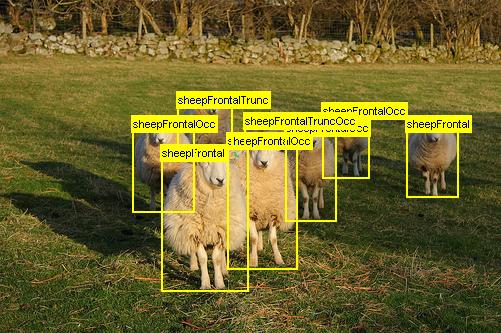
The PASCAL Visual Object Classes (VOC) 2012 dataset contains 20 object categories including vehicles, household, animals, and other: aeroplane, bicycle, boat, bus, car, motorbike, train, bottle, chair, dining table, potted plant, sofa, TV/monitor, bird, cat, cow, dog, horse, sheep, and person. Each image in this dataset has pixel-level segmentation annotations, bounding box annotations, and object class annotations. This dataset has been widely used as a benchmark for object detection, semantic segmentation, and classification tasks. The PASCAL VOC dataset is split into three subsets: 1,464 images for training, 1,449 images for validation and a private testing set. Source: Self-supervised Visual Feature Learning with Deep Neural Networks: A Survey Image Source: http://host.robots.ox.ac.uk/pascal/VOC/voc2012/examples/images/sheep_06.jpg

LRW

The Lip Reading in the Wild (LRW) dataset a large-scale audio-visual database that contains 500 different words from over 1,000 speakers. Each utterance has 29 frames, whose boundary is centered around the target word. The database is divided into training, validation and test sets. The training set contains at least 800 utterances for each class while the validation and test sets contain 50 utterances. Source: Towards Pose-invariant Lip-Reading Image Source: https://www.robots.ox.ac.uk/~vgg/data/lip_reading/lrw1.html

Argoverse 2

Argoverse 2 (AV2) is a collection of three datasets for perception and forecasting research in the self-driving domain. The annotated Sensor Dataset contains 1,000 sequences of multimodal data, encompassing high-resolution imagery from seven ring cameras, and two stereo cameras in addition to lidar point clouds, and 6-DOF map-aligned pose. Sequences contain 3D cuboid annotations for 26 object categories, all of which are sufficiently-sampled to support training and evaluation of 3D perception models. The Lidar Dataset contains 20,000 sequences of unlabeled lidar point clouds and map-aligned pose. This dataset is the largest ever collection of lidar sensor data and supports self-supervised learning and the emerging task of point cloud forecasting. Finally, the Motion Forecasting Dataset contains 250,000 scenarios mined for interesting and challenging interactions be- tween the autonomous vehicle and other actors in each local scene. Models are tasked with the prediction of future motion for “scored actors" in each scenario and are provided with track histories that capture object location, heading, velocity, and category. In all three datasets, each scenario contains its own HD Map with 3D lane and crosswalk geometry — sourced from data captured in six distinct cities. We believe these datasets will support new and existing machine learning research problems in ways that existing datasets do not. All datasets are released under the CC BY-NC-SA 4.0 license.

HICO-DET

HICO-DET is a dataset for detecting human-object interactions (HOI) in images. It contains 47,776 images (38,118 in train set and 9,658 in test set), 600 HOI categories constructed by 80 object categories and 117 verb classes. HICO-DET provides more than 150k annotated human-object pairs. V-COCO provides 10,346 images (2,533 for training, 2,867 for validating and 4,946 for testing) and 16,199 person instances. Each person has annotations for 29 action categories and there are no interaction labels including objects. Source: Visual Compositional Learning for Human-Object Interaction Detection Image Source: http://www-personal.umich.edu/~ywchao/hico/

ShapeNetCore

ShapeNetCore is a subset of the full ShapeNet dataset with single clean 3D models and manually verified category and alignment annotations. It covers 55 common object categories with about 51,300 unique 3D models. The 12 object categories of PASCAL 3D+, a popular computer vision 3D benchmark dataset, are all covered by ShapeNetCore.

3DMatch

The 3DMATCH benchmark evaluates how well descriptors (both 2D and 3D) can establish correspondences between RGB-D frames of different views. The dataset contains 2D RGB-D patches and 3D patches (local TDF voxel grid volumes) of wide-baselined correspondences. The pixel size of each 2D patch is determined by the projection of the 0.3m3 local 3D patch around the interest point onto the image plane. Source: 3DMatch: Learning Local Geometric Descriptors from RGB-D Reconstructions

NoCaps

The nocaps benchmark consists of 166,100 human-generated captions describing 15,100 images from the OpenImages validation and test sets. Source: nocaps: novel object captioning at scale Image Source: https://nocaps.org/

RAF-DB

The Real-world Affective Faces Database (RAF-DB) is a dataset for facial expression. It contains 29672 facial images tagged with basic or compound expressions by 40 independent taggers. Images in this database are of great variability in subjects' age, gender and ethnicity, head poses, lighting conditions, occlusions, (e.g. glasses, facial hair or self-occlusion), post-processing operations (e.g. various filters and special effects), etc. Source: Landmark Guidance Independent Spatio-channel Attention and Complementary Context Information based Facial Expression Recognition Image Source: http://www.whdeng.cn/raf/model1.html

FER2013

Fer2013 contains approximately 30,000 facial RGB images of different expressions with size restricted to 48×48, and the main labels of it can be divided into 7 types: 0=Angry, 1=Disgust, 2=Fear, 3=Happy, 4=Sad, 5=Surprise, 6=Neutral. The Disgust expression has the minimal number of images – 600, while other labels have nearly 5,000 samples each. Source: Eavesdrop the Composition Proportion of Training Labels in Federated Learning Image Source: https://medium.com/@birdortyedi_23820/deep-learning-lab-episode-3-fer2013-c38f2e052280

COD10K

Sensory ecologists have found that this s background matching camouflage strategy works by deceiving the visual perceptual system of the observer. Naturally, addressing concealed object detection (COD) requires a significant amount of visual perception knowledge. Understanding COD has not only scientific value in itself, but it also important for applications in many fundamental fields, such as computer vision (e.g., for search-and-rescue work, or rare species discovery), medicine (e.g., polyp segmentation, lung infection segmentation), agriculture (e.g., locust detection to prevent invasion), and art (e.g., recreational art). The high intrinsic similarities between the targets and non-targets make COD far more challenging than traditional object segmentation/detection. Although it has gained increased attention recently, studies on COD still remain scarce, mainly due to the lack of a sufficiently large dataset and a standard benchmark like Pascal-VOC, ImageNet, MS-COCO, ADE20K, and DAVIS. To build the large-scale COD dataset, we build the COD10K, which contains 10,000 images (5,066 camouflaged, 3,000 background, 1,934 noncamouflaged), divided into 10 super-classes, and 78 sub-classes (69 camouflaged, nine non-camouflaged) which are collected from multiple photography websites.
FDDB

The Face Detection Dataset and Benchmark (FDDB) dataset is a collection of labeled faces from Faces in the Wild dataset. It contains a total of 5171 face annotations, where images are also of various resolution, e.g. 363x450 and 229x410. The dataset incorporates a range of challenges, including difficult pose angles, out-of-focus faces and low resolution. Both greyscale and color images are included. Source: A Comparison of CNN-based Face and Head Detectors for Real-Time Video Surveillance Applications

IJB-B

The IJB-B dataset is a template-based face dataset that contains 1845 subjects with 11,754 images, 55,025 frames and 7,011 videos where a template consists of a varying number of still images and video frames from different sources. These images and videos are collected from the Internet and are totally unconstrained, with large variations in pose, illumination, image quality etc. In addition, the dataset comes with protocols for 1-to-1 template-based face verification, 1-to-N template-based open-set face identification, and 1-to-N open-set video face identification. Source: An Automatic System for Unconstrained Video-Based Face Recognition Image Source: https://www.vislab.ucr.edu/Biometrics2017/program_slides/Noblis_CVPRW_IJBB.pdf

CrowdHuman

CrowdHuman is a large and rich-annotated human detection dataset, which contains 15,000, 4,370 and 5,000 images collected from the Internet for training, validation and testing respectively. The number is more than 10× boosted compared with previous challenging pedestrian detection dataset like CityPersons. The total number of persons is also noticeably larger than the others with ∼340k person and ∼99k ignore region annotations in the CrowdHuman training subset. Source: SADet: Learning An Efficient and Accurate Pedestrian Detector Image Source: http://www.crowdhuman.org/

Objects365

Objects365 is a large-scale object detection dataset, Objects365, which has 365 object categories over 600K training images. More than 10 million, high-quality bounding boxes are manually labeled through a three-step, carefully designed annotation pipeline. It is the largest object detection dataset (with full annotation) so far and establishes a more challenging benchmark for the community. Source: Objects365: A Large-Scale, High-Quality Dataset for Object Detection Image Source: https://www.objects365.org/overview.html

IJB-A

The IARPA Janus Benchmark A (IJB-A) database is developed with the aim to augment more challenges to the face recognition task by collecting facial images with a wide variations in pose, illumination, expression, resolution and occlusion. IJB-A is constructed by collecting 5,712 images and 2,085 videos from 500 identities, with an average of 11.4 images and 4.2 videos per identity. Source: von Mises-Fisher Mixture Model-based Deep learning: Application to Face Verification Image Source: Ruan et al

AFLW

The Annotated Facial Landmarks in the Wild (AFLW) is a large-scale collection of annotated face images gathered from Flickr, exhibiting a large variety in appearance (e.g., pose, expression, ethnicity, age, gender) as well as general imaging and environmental conditions. In total about 25K faces are annotated with up to 21 landmarks per image. Source: Nose, Eyes and Ears: Head Pose Estimation by Locating Facial Keypoints

MegaDepth

The MegaDepth dataset is a dataset for single-view depth prediction that includes 196 different locations reconstructed from COLMAP SfM/MVS. Source: MegaDepth: Learning Single-View Depth Prediction from Internet Photos

DISFA

The Denver Intensity of Spontaneous Facial Action (DISFA) dataset consists of 27 videos of 4844 frames each, with 130,788 images in total. Action unit annotations are on different levels of intensity, which are ignored in the following experiments and action units are either set or unset. DISFA was selected from a wider range of databases popular in the field of facial expression recognition because of the high number of smiles, i.e. action unit 12. In detail, 30,792 have this action unit set, 82,176 images have some action unit(s) set and 48,612 images have no action unit(s) set at all. Source: Deep Learning For Smile Recognition Image Source: https://www.researchgate.net/figure/Examples-of-images-extracted-from-the-DISFA-dataset_fig5_301830237

2D-3D-S

The 2D-3D-S dataset provides a variety of mutually registered modalities from 2D, 2.5D and 3D domains, with instance-level semantic and geometric annotations. It covers over 6,000 m2 collected in 6 large-scale indoor areas that originate from 3 different buildings. It contains over 70,000 RGB images, along with the corresponding depths, surface normals, semantic annotations, global XYZ images (all in forms of both regular and 360° equirectangular images) as well as camera information. It also includes registered raw and semantically annotated 3D meshes and point clouds. The dataset enables development of joint and cross-modal learning models and potentially unsupervised approaches utilizing the regularities present in large-scale indoor spaces. Source: https://github.com/alexsax/2D-3D-Semantics Image Source: https://github.com/alexsax/2D-3D-Semantics

Taskonomy

Taskonomy provides a large and high-quality dataset of varied indoor scenes. - Complete pixel-level geometric information via aligned meshes. - Semantic information via knowledge distillation from ImageNet, MS COCO, and MIT Places. - Globally consistent camera poses. Complete camera intrinsics. - High-definition images. - 3x times big as ImageNet. Source: Taskonomy Image Source: http://taskonomy.stanford.edu/

fMoW

Functional Map of the World (fMoW) is a dataset that aims to inspire the development of machine learning models capable of predicting the functional purpose of buildings and land use from temporal sequences of satellite images and a rich set of metadata features. Source: Functional Map of the World Image Source: Christie et al

MPII Human Pose

MPII Human Pose Dataset is a dataset for human pose estimation. It consists of around 25k images extracted from online videos. Each image contains one or more people, with over 40k people annotated in total. Among the 40k samples, ∼28k samples are for training and the remainder are for testing. Overall the dataset covers 410 human activities and each image is provided with an activity label. Images were extracted from a YouTube video and provided with preceding and following un-annotated frames. Source: Accelerating Large-Kernel Convolution Using Summed-Area Tables Image Source: http://human-pose.mpi-inf.mpg.de/

Aff-Wild2

Aff-Wild2 is a large-scale in-the-wild database and an extension of the Aff-Wild dataset for affect recognition. It approximately doubles the number of included video frames and the number of subjects; thus, improving the variability of the included behaviors and of the involved persons. It is the only existing in-the-wild database with annotations for all 3 main behaviour tasks. The Aff-Wild2 is annotated in a per frame basis for the seven basic expressions (i.e., happiness, surprise, anger, disgust, fear, sadness and the neutral state), twelve action units (AUs 1,2,4,6,7,10,12,15,23,24,25, 26) and valence and arousal. In total Aff-Wild2 consists of 564 videos of around 2.8M frames with 554 subjects. Aff-Wild2 displays a big diversity in terms of subjects' ages, ethnicities and nationalities; it has also great variations and diversities of environments. Sources: 1) Expression, affect, action unit recognition: Aff-wild2, multi-task learning and arcface; 2) The 6th affective behavior analysis in-the-wild (abaw) competition

Pix3D

The Pix3D dataset is a large-scale benchmark of diverse image-shape pairs with pixel-level 2D-3D alignment. Pix3D has wide applications in shape-related tasks including reconstruction, retrieval, viewpoint estimation, etc. Source: http://pix3d.csail.mit.edu/ Image Source: http://pix3d.csail.mit.edu/

CAMO

Camouflaged Object (CAMO) dataset specifically designed for the task of camouflaged object segmentation. We focus on two categories, i.e., naturally camouflaged objects and artificially camouflaged objects, which usually correspond to animals and humans in the real world, respectively. Camouflaged object images consists of 1250 images (1000 images for the training set and 250 images for the testing set). Non-camouflaged object images are collected from the MS-COCO dataset (1000 images for the training set and 250 images for the testing set). CAMO has objectness mask ground-truth.

Cholec80

Cholec80 is an endoscopic video dataset containing 80 videos of cholecystectomy surgeries performed by 13 surgeons. The videos are captured at 25 fps and downsampled to 1 fps for processing. The whole dataset is labeled with the phase and tool presence annotations. The phases have been defined by a senior surgeon in Strasbourg hospital, France. Since the tools are sometimes hardly visible in the images and thus difficult to be recognized visually, a tool is defined as present in an image if at least half of the tool tip is visible. Source: EndoNet: A Deep Architecture for Recognition Tasks on Laparoscopic Videos[https://arxiv.org/pdf/1602.03012.pdf]

출처: Papers with Code · CC BY-SA 4.0. 아카이브 자료와 새로 수집한 논문은 별도로 관리합니다.