Papers with Code · CC BY-SA 4.0

데이터셋 탐색

데이터셋의 설명·홈페이지를 찾고, 관련 태스크의 평가 기록을 살펴보세요.

관련 논문 1편

Criteo Attribution Modeling Dataset

Criteo Attribution Modeling Dataset 설명 보기

Content of this dataset This dataset includes following files: README.md criteo_attribution_dataset.tsv.gz: the dataset itself (623M compressed) Experiments.ipynb: ipython notebook with code and utilities to reproduce the results in the paper. Can also be used as a starting point for further research on this data. It requires python 3.* and standard scientific libraries such as pandas, numpy and sklearn. Data description This dataset represents a sample of 30 days of Criteo live traffic data. Each line corresponds to one impression (a banner) that was displayed to a user. For each banner we have detailed information about the context, if it was clicked, if it led to a conversion and if it led to a conversion that was attributed to Criteo or not. Data has been sub-sampled and anonymized so as not to disclose proprietary elements. Here is a detailed description of the fields (they are tab-separated in the file): timestamp: timestamp of the impression (starting from 0 for the first impression). The dataset is sorted according to timestamp. uid a unique user identifier campaign a unique identifier for the campaign conversion 1 if there was a conversion in the 30 days after the impression (independently of whether this impression was last click or not) conversion_timestamp the timestamp of the conversion or -1 if no conversion was observed conversion_id a unique identifier for each conversion (so that timelines can be reconstructed if needed). -1 if there was no conversion attribution 1 if the conversion was attributed to Criteo, 0 otherwise click 1 if the impression was clicked, 0 otherwise click_pos the position of the click before a conversion (0 for first-click) click_nb number of clicks. More than 1 if there was several clicks before a conversion cost the price paid by Criteo for this display (disclaimer: not the real price, only a transformed version of it) cpo the cost-per-order in case of attributed conversion (disclaimer: not the real price, only a transformed version of it) time_since_last_click the time since the last click (in s) for the given impression cat[1-9] contextual features associated to the display. Can be used to learn the click/conversion models. We do not disclose the meaning of these features but it is not relevant for this study. Each column is a categorical variable. In the experiments, they are mapped to a fixed dimensionality space using the Hashing Trick (see paper for reference). Key figures 2,4Gb uncompressed 16.5M impressions 45K conversions 700 campaigns Tasks This dataset can be used in a large scope of applications related to Real-Time-Bidding, including but not limited to: Attribution modeling: rule based, model based, etc… Conversion modeling in display advertising: the data includes cost and value used for computing Utility metrics. Offline metrics for real-time bidding
관련 논문 1편

CropCOCO

CropCOCO 설명 보기

CropCOCO is a validation-only dataset of COCO val 2017 images cropped such that some keypoints annotations are outside of the image. It can be used for keypoint detection, out-of-image keypoint detection and localization, person detection and amodal person detection.

관련 논문 1편

Data from: Using network approaches to enhance the analysis of cross-linguistic polysemies

Cross-Linguistic Polysemies
Cross-Linguistic Polysemies 설명 보기

Data from: Using network approaches to enhance the analysis of cross-linguistic polysemies

관련 논문 1편

Cross-Modal Comments Dataset

Cross-Modal Comments Dataset 설명 보기

Cross Modal Automatic Commenting (CMAC) is a task which aims to automatically generate comments for graphic news. The CMAC dataset is a large-scale dataset for this task which consists of 24,134 graphic news. Each instance is composed of several news photos, news title, news body, and corresponding high-quality comments. Source: https://github.com/lancopku/CMAC

관련 논문 1편

Cross-View Cross-Scene Multi-View Crowd Counting Dataset

Cross-View Cross-Scene Multi-View Crowd Counting Dataset 설명 보기

A large synthetic multi-camera crowd counting dataset with a large number of scenes and camera views to capture many possible variations, which avoids the difficulty of collecting and annotating such a large real dataset. The dataset is generated using GCC-CL [50], which works as a plug-in for the game “Grand Theft Auto V”. The generating process consists of two parts: scene simulation and multiview recording. First, crowd scenes are simulated, through the selection of the background selected, region of interest (ROI), weather condition, human models and postures, etc. Next, cameras are placed at various locations to record the crowd scene from various perspectives. Birds-eye views are also collected for visualization. Each person has a specific ID for mapping their coordinates in the world coordinate system and their locations in each camera-view image. The camera parameters, such as coordinates, deflection angles and fields-of-view, are also recorded. In total, the whole synthetic MV counting dataset contains 31 scenes. For each scene, around 100 camera views re set for multi-view recording. The multi-view recording is performed 100 times with different crowd distributions in the scene, i.e., each scene contains 100 multi-view frames, with each frame comprising 60 to 120 camera-views. The image resolution is 1920×1080.

관련 논문 1편

Cross-View Time Dataset (Cross-Camera Split)

Cross-View Time Dataset (Cross-Camera Split) 설명 보기

The standard evaluation protocol of Cross-View Time dataset allows for certain cameras to be shared between training and testing sets. This protocol can emulate scenarios in which we need to verify the authenticity of images from a particular set of devices and locations. Considering the ubiquity of surveillance systems (CCTV) nowadays, this is a common scenario, especially for big cities and high visibility events (e.g., protests, musical concerts, terrorist attempts, sports events). In such cases, we can leverage the availability of historical photographs of that device and collect additional images from previous days, months, and years. This would allow the model to better capture the particularities of how time influences the appearance of that specific place, probably leading to a better verification accuracy. However, there might be cases in which data is originated from heterogeneous sources, such as social media. In this sense, it is essential that models are optimized on camera-disjoint sets to avoid learning sensor-specific characteristics that might not generalize accordingly for new imagery during inference. With this in mind, we propose a novel organization for CVT dataset. We split available data into training and testing sets, ensuring that all images from a single camera are assigned to the same set. During this division, we aimed to keep the size of each set roughly similar to the original splits, allowing models to be optimized with similar amounts of data.

관련 논문 1편

Cross-cultural pop song mood ratings (US, KR, BR)

Cross-cultural pop song mood ratings (US, KR, BR) 설명 보기
  • Mood ratings of 8 emotions gathered across 360 pop songs - 166 raters from US, S.Korea and Brazil - MIR features from Spotify
관련 논문 1편

Cross-institution Male Pelvic Structures

Cross-institution Male Pelvic Structures 설명 보기

The data set includes 589 T2-weighted images acquired from the same number of patients collected by seven studies, INDEX, the SmartTarget Biopsy Trial, PICTURE, TCIA Prostate3T, Promise12, TCIA ProstateDx (Diagnosis) and the Prostate MR Image Database. Further details are reported in the respective study references. These images were divided into seven subsets based on the acquiring institution. The cross-institution imaging protocols contain multiple scanners (two manufacturers with mixed 1.5 and 3T field strengths), varying field-of-view and anisotropic voxels, in-plane voxel dimensions ranging between 0.3 and 1.0 mm and out-of-plane spacing between 1.8 and 5.4 mm. For each image, eight anatomical structures of planning interest, including bladder, bone, neurovascular bundle, obturator internus, zone, rectum, seminal vesicle, transition zone and peripheral zone were labelled. All segmentations were manually annotated by eight biomedical imaging researchers, with experience ranging from 2 to 10 years in the annotation of medical image data, each annotating a mixed-institution subset using an institution-stratified sampling. Each annotation has been reviewed at least once. All images and labels could be found in data.zip while the indexing from image to trial and to institution are respectively provided in trial.txt and institution.txt. if you find this labelled data set useful for your research please consider to acknowledge the work: Li, Y., et al. "Prototypical few-shot segmentation for cross-institution male pelvic structures with spatial registration." arXiv preprint arXiv:2209.05160 (2022).

관련 논문 1편

CrossLoc Benchmark Datasets

CrossLoc Benchmark Datasets 설명 보기

To study the data-scarcity mitigation for learning-based visual localization methods via sim-to-real transfer, we curate and now present the CrossLoc benchmark datasets—a multimodal aerial sim-to-real data available for flights above nature and urban terrains. Unlike the previous computer vision datasets focusing on localization in a single domain (mostly real RGB images), the provided benchmark datasets include various multimodal synthetic cues paired to all real photos. Complementary to the paired real and synthetic data, we offer rich synthetic data that efficiently fills the flight envelope volume in the vicinity of the real data. The synthetic data rendering was achieved using the proposed data generation workflow TOPO-DataGen. The provided CrossLoc datasets were used as an initial benchmark to showcase the use of synthetic data to assist visual localization in the real world with limited real data. Please refer to our main paper at https://arxiv.org/abs/2112.09081 and our code at https://github.com/TOPO-EPFL/CrossLoc for details.

관련 논문 1편

CrossedWires

CrossedWires 설명 보기

CrossedWires is a living dataset of models and hyperparameters that exposes semantic differences between two popular deep learning frameworks: PyTorch and Tensorflow. The CrossedWires dataset currently consists of models trained on CIFAR10 images using three different computer vision architectures: VGG16, ResNet50 and DenseNet121 across a large hyperparameter space. Using hyperparameter optimization, each of the three models was trained on 400 sets of hyperparameters suggested by the HyperSpace search algorithm. The CrossedWires dataset includes PyTorch and Tensforflow models with test accuracies as different as 0.681 on syntactically equivalent models and identical hyperparameter choices. The 340 GB dataset and benchmarks presented here include the performance statistics, training curves, and model weights for all 1200 hyperparameter choices, resulting in 2400 total models. The CrossedWires dataset provides an opportunity to study semantic differences between syntactically equivalent models across popular deep learning frameworks.

관련 논문 1편

Crowd Activity Dataset

Crowd Activity Dataset 설명 보기

This dataset concentrates on the activities of the crowd for a fine-grained image classification task, named as Crowd Activity dataset, as automatically understanding crowd activity is meaningful for social security. This dataset is newly collected, where the images are mainly searched on the Internet and collected from streets by mobile phones. All images in this dataset contain at least one text instance. The categories come from activities of daily living and demonstrations stimulated by hot events in recent years. Specifically, this dataset consists of 21 categories and 8785 images in total. The 21 categories broadly fall into two types: activities of daily living(i.e., celebrating Christmas, holding sport meeting, holding concert, celebrating birthday party, celebrity speech, teaching, graduation ceremony, picnic, press briefing, shopping, celebrating Thanks giving day) and demonstrations (i.e., protecting animals, protecting environment, appealing for peace, Brexit, COVID-19, election, immigrant, respecting female, racial equality, mouvement des gilets jaunes).

관련 논문 1편

Crowd Dataset

Crowd Dataset 설명 보기

A dense crowd dataset with manually annotated groundtruth, collected from different public datasets. This dataset comprises 20 videos that exhibit a multitude of motion behaviors that cover both the obvious and subtle instabilities. Source: Crowd Dataset

관련 논문 1편

CrowdFix

CrowdFix 설명 보기

Contributes dataset: (1) reviewing the dynamics behind saliency and crowds. (2) using eye tracking to create a dynamic human eye fixation dataset over a new set of crowd videos gathered from the Internet. The videos are annotated into three distinct density levels. Source: CrowdFix: An Eyetracking Dataset of Real Life Crowd Videos

관련 논문 1편

CrowdSpeech

CrowdSpeech 설명 보기

CrowdSpeech is a publicly available large-scale dataset of crowdsourced audio transcriptions. It contains annotations for more than 20 hours of English speech from more than 1,000 crowd workers.

관련 논문 1편

Cry Wolf

Cry Wolf 설명 보기

Cry Wolf is a dataset for cyber security analysis tasks. It is an open-access dataset of 73 true and false Intrusion Detection System (IDS) alarms derived from real-world examples of "impossible travel" scenarios.

관련 논문 1편

Cryptocurrency User Attitudes Towards the Environmental Impact of Proof-of-Work in Nigeria: Online Survey Results

Cryptocurrency User Attitudes Towards the Environmental Impact of Proof-of-Work in Nigeria: Online Survey Results 설명 보기

The "Cryptocurrency User Attitudes Towards the Environmental Impact of Proof-of-Work in Nigeria" online survey is a convenience sample survey of residents of Nigeria aged 16 and over that have participated in Bitcoin transactions in the past. Between November 2021 and March 2022, participants were asked their opinions on cryptocurrencies, the environmental effects of using them, and attitudes towards these effects.

관련 논문 1편

CstomStudio

CstomStudio 설명 보기
  • This dataset is composed of 69 individual objects and 57 meaningful pairs. - The objects cover a wide range of categories, including decor item, food, furniture, instrument, jewelry, luggage, person, pet, plant, plushie, scene, thing, toy, transportation, and wearable item.
관련 논문 1편

Cuff-Less Blood Pressure Estimation. Pre-processed and cleaned vital signals for cuff-less BP estimation.

Cuff-Less Blood Pressure Estimation
Cuff-Less Blood Pressure Estimation 설명 보기

##Data Set Information: The main goal of this data set is providing clean and valid signals for designing cuff-less blood pressure estimation algorithms. The raw electrocardiogram (ECG), photoplethysmograph (PPG), and arterial blood pressure (ABP) signals are originally collected from the physionet.org and then some preprocessing and validation performed on them. (For more information about the process please refer to our paper) ##Attribute Information: This database consists of a cell array of matrices, each cell is one record part. In each matrix each row corresponds to one signal channel: 1: PPG signal, FS=125Hz; photoplethysmograph from fingertip 2: ABP signal, FS=125Hz; invasive arterial blood pressure (mmHg) 3: ECG signal, FS=125Hz; electrocardiogram from channel II Note: dataset is splitted to multiple parts to make it easier to load on machines with low memory. Each cell is a record. There might be more than one record per patient (which is not possible to distinguish). However, records of the same patient appear next to each other. N-fold cross test and train is suggested to reduce the chance of trainset being contaminated by test patients.

관련 논문 1편

Cultural Events Classification using Hyper-parameter Optimization of Deep Learning Technique

Cultural Events Classification using Hyper-parameter Optimization of Deep Learning Technique 설명 보기

Abstract: Through digitization, maintaining and promoting cultural heritage is being strengthened. Concerning this background, this study presents a new Indonesia cultural events dataset and automatic image classification for cultural events. The dataset was developed using the Flickr image platform, and the five cultural events image was collected including the Baliem Festival, Jember Fashion Festival, Nyepi Festival, Pacu Jawi, and Pasola Festival. Further, Convolutional Neural Networks (CNN) was developed for the classification method. A comparison of CNN models (VGG16 and VGG19) using several optimization configurations was performed to get the best model. The results showed that the VGG16 with image augmentation and dropout regularization technique performed best with 94.66% accuracy. This study hoped to support the heritage's digital documentation process and preserve Indonesia's cultural heritage. * Image Source: The Flickr images under Attribution-Noncommercial License * Dataset Source: Indonesia Cultural Events Dataset * Paper Source: Link * The dataset consisted of 1,500 images and was divided into 300 images in each class. * Citation: Zhipeng, F., & Gani, H. (2021). Cultural Events Classification using Hyper-parameter Optimization of Deep Learning Technique. International Journal of Advanced Computer Science and Applications, 12(5). [APA Style]

관련 논문 1편

Custom MNIST

Custom MNIST 설명 보기

Click to add a brief description of the dataset (Markdown and LaTeX enabled). Provide: * a high-level explanation of the dataset characteristics * explain motivations and summary of its content * potential use cases of the dataset

관련 논문 1편

Custom Spatio-Temporal Action Video Dataset

Custom Spatio-Temporal Action Video Dataset 설명 보기

This spatio-temporal actions dataset for video understanding consists of 4 parts: original videos, cropped videos, video frames, and annotation files. This dataset uses a proposed new multi-person annotation method of spatio-temporal actions. First, we use ffmpeg to crop the videos and frame the videos; then use yolov5 to detect human in the video frame, and then use deep sort to detect the ID of the human in the video frame. By processing the detection results of yolov5 and deep sort, we can get the annotation file of the spatio-temporal action dataset to complete the work of customizing the spatio-temporal action dataset.

관련 논문 1편

CzEng 2.0 Parallel Corpus

CzEng 2.0 Parallel Corpus 설명 보기

Czech-English parallel corpus CzEng 2.0 consisting of over 2 billion words (2 "gigawords") in each language. The corpus contains document-level information and is filtered with several techniques to lower the amount of noise. Source: Announcing CzEng 2.0 Parallel Corpus with over 2 Gigawords

관련 논문 1편

D-Nikud dataset

D-Nikud dataset 설명 보기

Click to add a brief description of the dataset (Markdown and LaTeX enabled). D Provide: D* a high-level explanation of the dataset characteristics * explain motivations and summary of its content * potential use cases of the dataset --DASDSSDSDS

관련 논문 1편

Dynamic-OneCommon Corpus

D-OCC
D-OCC 설명 보기

D-OCC is a large-scale dataset of 5,617 dialogues to enable fine-grained evaluation and analysis of various dialogue systems. It is used to study common grounding in dynamic environments.

관련 논문 1편

D2City

D2City 설명 보기

A large-scale comprehensive collection of dashcam videos collected by vehicles on DiDi's platform. D2-City contains more than 10000 video clips which deeply reflect the diversity and complexity of real-world traffic scenarios in China. Source: D$^2$-City: A Large-Scale Dashcam Video Dataset of Diverse Traffic Scenarios

관련 논문 1편

Dynamic 3D Facial Action Coding System Database

D3DFACS
D3DFACS 설명 보기

The D3DFACS dataset is a dynamic 3D facial expression data set based on the Facial Action Coding System. It contains Action Unit (AU) sequences from 10 people, with 519 sequences in total. The peak image of each expression sequence has been manually FACS coded by a certified expert. Registered meshes in FLAME mesh topology are available under https://flame.is.tue.mpg.de/downloads

관련 논문 1편

Dual-Arm Dexterity-Aware

DA$^2$
DA$^2$ 설명 보기

DA2 is a large-scale Dual-Arm Dexterity-Aware (DA2) grasp dataset, including a total of about 9M parallel-jaw grasp pairs for more than 6000 different meshes. The grasp pairs are labeled with multiple grasp dexterity measures by fully analyzing the grasp matrix. The dataset constitutes a standardized data source filling the gap in vision-guided dual-arm grasping of arbitrary objects.

관련 논문 1편

Driving Agents in Dynamic Environments

DADE
DADE 설명 보기

The DADE dataset, short for Driving Agents in Dynamic Environments, is a synthetic dataset designed for the training and evaluation of methods for the task of semantic segmentation in the context of autonomous driving agents navigating dynamic environments and weather conditions. This dataset was generated using the CARLA simulator (version 0.9.14) to provide perfect sensor synchronization and calibration, as well as precise semantic segmentation ground truths. All data were collected within the Town12 map in CARLA. DADE dataset is divided into two sub-datasets. For both subsets, each sequence is acquired by one agent (one ego vehicle) running for some time within a 5-hour time frame, amounting to a total of 990k frames for the entire dataset. The agents travel various locations such as forest, countryside, rural farmland, highway, low density residential, community buildings, and high density residential.

관련 논문 1편

DAIS

DAIS 설명 보기

A large benchmark dataset containing 50K human judgments for 5K distinct sentence pairs in the English dative alternation. This dataset includes 200 unique verbs and systematically varies the definiteness and length of arguments. Source: Investigating representations of verb bias in neural language models

관련 논문 1편

A Domain‑Aware Patent Retrieval Dataset Aggregated at the Family Level

DAPFAM
DAPFAM 설명 보기

Dataset DAPFAM See the accompanying paper: Ayaou et al., 2025 — “DAPFAM: A Domain‑Aware Patent Retrieval Dataset Aggregated at the Family Level” (arXiv:2506.22141). ## Summary DAPFAM provides 1 247 balanced query patent families and 45 336 target families with forward/backward‑citation relevance labels (≈ 50 K pairs). Each relevant link is explicitly marked in‑domain or out‑of‑domain according to IPC 3‑char overlap, enabling rigorous cross‑domain evaluation. * Full text (title · abstract · claims · description) plus rich metadata for every family. * Multi‑jurisdictional, English‑only text (families may originate in US, JP, EP, CN, …). * Parquet qrel file: qrels_all.parquet. ## Dataset Structure corpus.parquet # 45 336 rows, targets – every original column from the paper queries.parquet # 1 247 rows, queries – same columns + abstract_keywords qrels_all.parquet # (all | in | out) four‑column tables → query_id · relevant_id · relevance_score · domain_rel ## Citation @misc{ayaou2025dapfam, title={DAPFAM: A Domain-Aware Patent Retrieval Dataset Aggregated at the Family Level}, author={Iliass Ayaou and Denis Cavallucci and Hicham Chibane}, year={2025}, eprint={2506.22141}, archivePrefix={arXiv}, primaryClass={cs.CL} } ## Quick Stats * Queries: 1,247 * Corpus (targets): 45,336 * Qrels (all): 49,869 * Qrels (in): 19,736 * Qrels (out): 5,193

관련 논문 1편

DART-Math-Uniform

DART-Math-Uniform 설명 보기

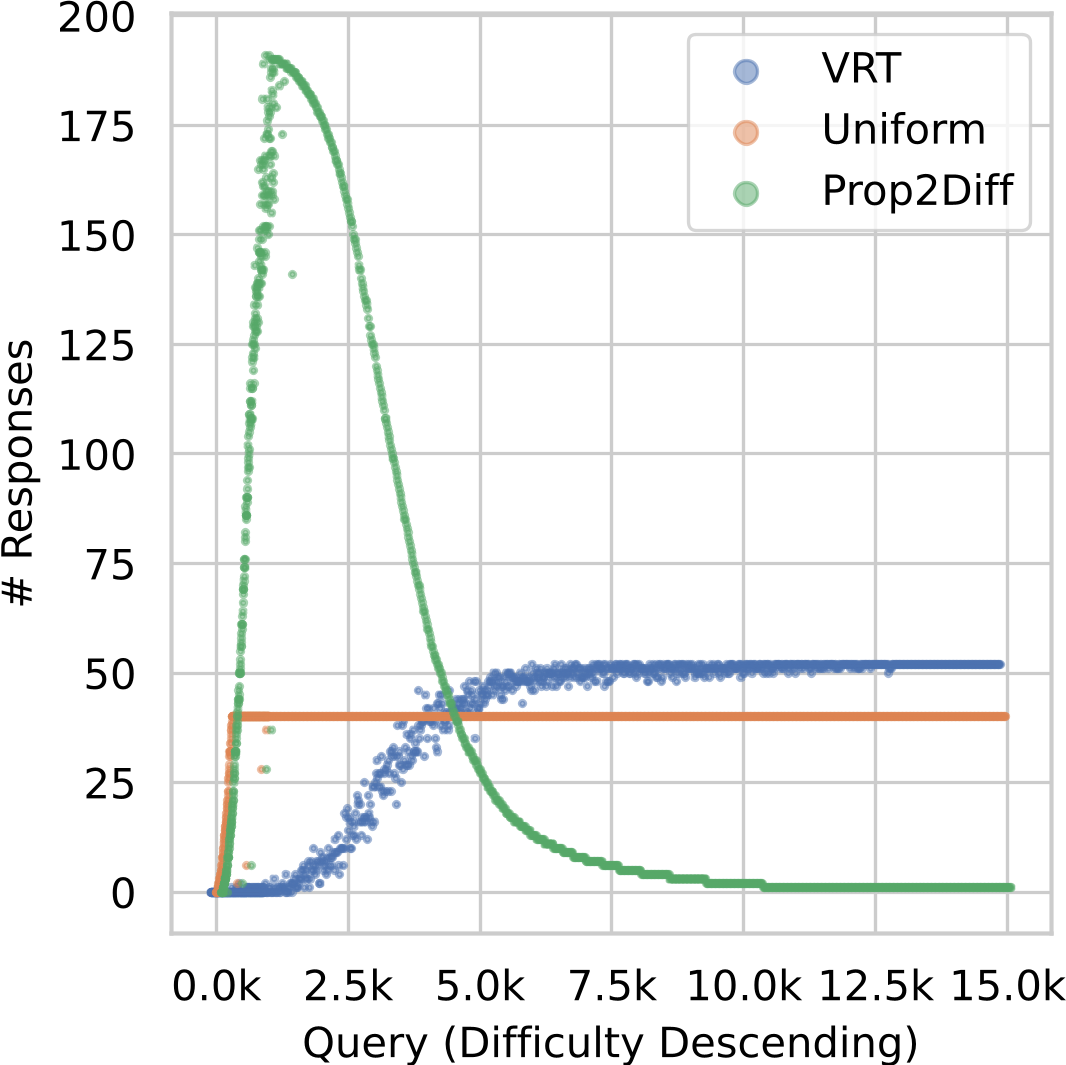
🎯 DART-Math > Difficulty-Aware Rejection Tuning for Mathematical Problem-Solving 📝 Paper@arXiv | 🤗 Datasets&Models@HF | 🐱 Code@GitHub 🐦 Thread@X(Twitter) | 🐶 中文博客@知乎 | 📊 Leaderboard@PapersWithCode | 📑 BibTeX ## Datasets: DART-Math DART-Math datasets are the state-of-the-art and data-efficient open-source instruction tuning datasets for mathematical reasoning. DART-Math-Hard contains ~585k mathematical QA pair samples constructed by applying DARS-Prop2Diff to the query set from MATH and GSK8K training sets, achieves SOTA on many challenging mathematical reasoning benchmarks. It introduces a deliberate bias towards hard queries, opposite to vanilla rejection sampling. Performance produced by DART-Math-Hard is usually but not necessarily slightly better (~1% absolutely) than DART-Math-Uniform, which contains ~591k samples constructed by applying DARS-Uniform. ### Comparison between Mathematical Instruction Tuning Datasets Most of previous datasets are constructed with ChatGPT, and many of them are not open-source, especially for ones of the best performance. | Math SFT Dataset | # of Samples | MATH | GSM8K | College | Synthesis Agent(s) | Open-Source | | :--------------------------------------------------------------------------------- | -----------: | -----------------------------------------------------------------: | ---------------------------------------------: | -----------------------------------------------------------------------------------------------------------: | :---------------------- | :-------------------------------------------------------------------------: | | WizardMath | 96k | 32.3 | 80.4 | 23.1 | GPT-4 | ✗ | | MetaMathQA | 395k | 29.8 | 76.5 | 19.3 | GPT-3.5 | ✓ | | MMIQC | 2294k | 37.4 | 75.4 | 28.5 | GPT-4+GPT-3.5+Human | ✓ | | Orca-Math | 200k | -- | -- | -- | GPT-4 | ✓ | | Xwin-Math-V1.1 | 1440k | 45.5 | 84.9 | 27.6 | GPT-4 | ✗ | | KPMath-Plus | 1576k | 46.8 | 82.1 | -– | GPT-4 | ✗ | | MathScaleQA | 2021k | 35.2 | 74.8 | 21.8 | GPT-3.5+Human | ✗ | | DART-Math-Uniform | 591k | 43.5 | 82.6 | 26.9 | DeepSeekMath-7B-RL | ✓ | | DART-Math-Hard | 585k | 45.5 | 81.1 | 29.4 | DeepSeekMath-7B-RL | ✓ | <sup>MATH and GSM8K are in-domain, while College(Math) is out-of-domain. Performance here are of models fine-tuned from Mistral-7B, except for Xwin-Math-V1.1 based on Llama2-7B. Bold/Italic means the best/second best score here.</sup> ## Dataset Construction: DARS - Difficulty-Aware Rejection Sampling Previous works usually synthesize data from proprietary models to augment existing datasets, followed by instruction tuning to achieve top-tier results. However, our analysis of these datasets reveals severe biases towards easy queries, with frequent failures to generate any correct response for the most challenging queries. Motivated by the observation above, we propose to Difficulty-Aware Rejection Sampling (DARS), to collect more responses for more difficult queries. Specifically, we introduce two strategies to increase the number of correct responses for difficult queries: 1) Uniform, which involves sampling responses for each query until each query accumulates $k_u$ correct responses, where $k_u$ is a preset hyperparameter determined by the desired size of the synthetic dataset; 2) Prop2Diff, where we continue sampling responses until the number of correct responses for each query is proportional to its difficulty score. The most challenging queries will receive $k_p$ responses and kp is a hyperparameter. This method introduces a deliberate bias in the opposite direction to vanilla rejection sampling, towards more difficult queries, inspired by previous works that demonstrate difficult samples can be more effective to enhance model capabilities (Sorscher et al., 2022; Liu et al., 2024b). See Figure 1 (Right) for examples of DART-Math-Uniform by DARS-Uniform and DART-Math-Hard by DARS-Prop2Diff. ## Citation If you find our data, model or code useful for your work, please kindly cite our paper: latex @article{tong2024dartmath, title={DART-Math: Difficulty-Aware Rejection Tuning for Mathematical Problem-Solving}, author={Yuxuan Tong and Xiwen Zhang and Rui Wang and Ruidong Wu and Junxian He}, year={2024}, eprint={2407.13690}, archivePrefix={arXiv}, primaryClass={cs.CL}, url={https://arxiv.org/abs/2407.13690}, }

관련 논문 1편

Daily Activity Recordings for AI and ML applications

DARai
DARai 설명 보기

Daily Activity Recordings for Artificial Intelligence (DARai, pronounced "Dahr-ree") is a multimodal, hierarchically annotated dataset constructed to understand human activities in real-world settings. DARai consists of continuous scripted and unscripted recordings of 50 participants in 10 different environments, totaling over 200 hours of data from 20 sensors including multiple camera views, depth and radar sensors, wearable inertial measurement units (IMUs), electromyography (EMG), insole pressure sensors, biomonitor sensors, and gaze tracker. To capture the complexity in human activities, DARai is annotated at three levels of hierarchy: (i) high-level activities (L1) that are independent tasks, (ii) lower-level actions (L2) that are patterns shared between activities, and (iii) fine-grained procedures (L3) that detail the exact execution steps for actions. The dataset annotations and recordings are designed so that 22.7% of L2 actions are shared between L1 activities and 14.2% of L3 procedures are shared between L2 actions. The overlap and unscripted nature of DARai allows counterfactual activities in the dataset. Experiments with various machine learning models showcase the value of DARai in uncovering important challenges in human-centered applications. Specifically, we conduct unimodal and multimodal sensor fusion experiments for recognition, temporal localization, and future action anticipation across all hierarchical annotation levels. To highlight the limitations of individual sensors, we also conduct domain-variant experiments that are enabled by DARai's multi-sensor and counterfactual activity design setup. The code, documentation, and dataset are available at the dedicated DARai website.

관련 논문 1편

DAS-2

DAS-2 설명 보기

The DAS-2 traces were kindly provided by the Advanced School for Computing and Imaging (ASCI), the owner of the DAS-2 system. To use these traces, you must include an acknowledgement to the source of the data in any published material that refers to the data. Please also consider refering to the Grid Workloads Archive in the acknowledgements.

관련 논문 1편

DATA-PHM

DATA-PHM 설명 보기

🔍 About data: Our database is designed to be a key tool in the advancement of practical research and application in rotating machinery monitoring. It covers a variety of operating conditions and fault types, making the data applicable to a wide range of industrial scenarios. 🛠 Python Package: This database is provided with a Python package, developed by a P.hD Khaled Benaggoune, which automates the downloading of data, the loading of metadata, and preparing the training and testing splits. This tool is designed to save researchers valuable time, enabling them to concentrate on developing and deploying conditional monitoring algorithms. 💡 Objective: You are invited to review the paper via the following DOI link https://doi.org/10.36001/ijphm.2023.v14i2.3497 to find out more about the data content and the remote access links. Also, the associated codes for the preparation of each database, to be used in your own research and development projects, are available on the following Github: https://github.com/khaledbenag/machinery. 📝 Below the DOI links of the papers that used these data : https://doi.org/10.1016/j.measurement.2019.03.065 ; https://doi.org/10.1016/j.ymssp.2020.106680 ; https://doi.org/10.1007/s10845-022-01919-y

관련 논문 1편

'Depth-Aware VIdeo DEblurring'

DAVIDE
DAVIDE 설명 보기

The DAVIDE dataset consists of synchronized blurred, depth, and sharp videos. The dataset comprises 90 video sequences divided into 69 for training, 7 for validation, and 14 for testing. The test set includes annotations of seven content attributes categorized by: 1) environment (indoor/outdoor), 2) motion (camera motion/camera and object motion), and 3) scene proximity (close/mid/far). These annotations aim to facilitate further analysis into scenarios where depth information could be more beneficial.

관련 논문 1편

DAVIS-Edit

DAVIS-Edit 설명 보기

DAVIS-Edit is a curated testing benchmark for video editing. This dataset contains two evaluation settings, i.e., text- and image-based editing. Besides, it offers two types of annotated for both modalities of prompts, considering the editing scenarios with similar (DAVIS-Edit-S) and changing (DAVIS-Edit-C) shapes, so as to address the shape inconsistency problem in video-to-video editing.

관련 논문 1편

Single Direct Borohydride Fuel Cell Dataset

DBFC Dataset
DBFC Dataset 설명 보기

This dataset includes Direct Borohydride Fuel Cell (DBFC) impedance and polarization test in anode with Pd/C, Pt/C and Pd decorated Ni–Co/rGO catalysts. In fact, different concentration of Sodium Borohydride (SBH), applied voltages and various anode catalysts loading with explanation of experimental details of electrochemical analysis are considered in data. Voltage, power density and resistance of DBFC change as a function of weight percent of SBH (%), applied voltage and amount of anode catalyst loading that are evaluated by polarization and impedance curves with using appropriate equivalent circuit of fuel cell. Can be stated that interpretation of electrochemical behavior changes by the data of related cell is inevitable, which can be useful in simulation, power source investigation and depth analysis in DB fuel cell researches.

관련 논문 1편

DBP-5L (Spanish)

DBP-5L (Spanish) 설명 보기

DPB-5L is a Multilingual KG dataset containing 5 KGs in English, French, Japanese, Greek, and Spanish. The dataset is used for the Knowledge Graph Completion and Entity Alignment task. DPB-5L (Spanish) is a subset of DPB-5L with Spanish KG.

관련 논문 1편

DBP2.0 zh-en

DBP2.0 zh-en 설명 보기

The DBP2.0 dataset can be downloaded from the figshare repository. It has three entity alignment settings, i.e., ZH-EN, JA-EN and FR-EN. Each setting has the following files: ent_links: reference entity alignment; rel_triples_1: relation triples in the ZH or JA or FR KG, list of triples like (h \t r \t t); rel_triples_2: relation triples in the EN KG; splits/train_links: training data for entity alignment, list of pairs like (e1 \t e2); splits/valid_links: validation data for entity alignment; splits/test_links: test data for entity alignment; splits/train_unlinked_ent1: training data for dangling entity detection, list of dangling entities in the ZH or JA or FR KG; splits/train_unlinked_ent2: training data for dangling entity detection, list of dangling entities in the EN KG; splits/valid_unlinked_ent1: validation data for dangling entity detection, list of dangling entities in the ZH or JA or FR KG; splits/valid_unlinked_ent2: validation data for dangling entity detection, list of dangling entities in the EN KG; splits/test_unlinked_ent1: test data for dangling entity detection, list of dangling entities in the ZH or JA or FR KG; splits/test_unlinked_ent2: test data for dangling entity detection, list of dangling entities in the EN KG; More information see: https://github.com/nju-websoft/OpenEA/tree/master/dbp2.0

관련 논문 1편

DBpedia NIF

DBpedia NIF 설명 보기

The dataset provides the content of all articles for 128 Wikipedia languages. The dataset has been further enriched with about 25% more links and selected partitions published as Linked Data. Source: DBpedia NIF: Open, Large-Scale and Multilingual Knowledge Extraction Corpus